TLDR#
The highest level concept representing a client to Vulcan Forge. Models and supports the complexities of a financial institution, regardless of its size.Who uses Vulcan Forge#
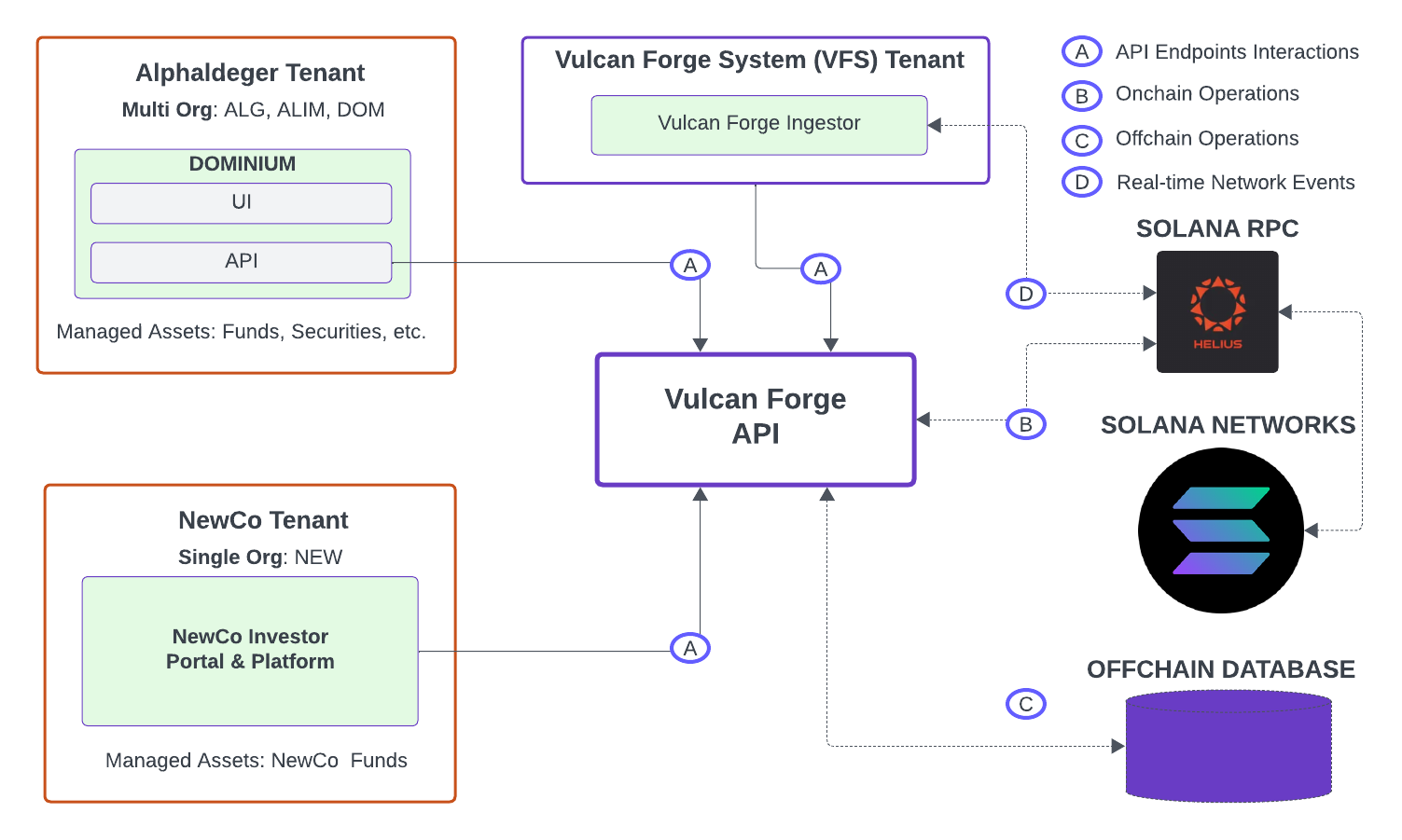
As a multi-tenant software-as-a-service platform, Vulcan Forge allows the concurrent usage of its API endpoints by multiple financial institutions by providing clear separation of data associated with and used by each tenant.There are 3 types of tenants supported by Vulcan Forge:1.
Multi-org Tenants - Tenants which have a designated parent/root organization and a set of sub-organizations sitting directly underneath it.
2.
Single-org Tenants - Tenants which are setup with a single organization.
3.
The System Tenant - A default tenant created at Vulcan Forge's inception which performs special functions shared across the entire platform.
ALG -> Alphaledger Group - the parent org
ALIM -> Alphaledger Investment Management - the org that manages the issuance and onchain management of new funds through Vulcan Forge
DOM -> Dominium - an org that groups the investors' accounts which hold financial instruments issued by ALIM
System Tenant Responsabilities#
The Vulcan Forge System (VFS) tenant peforms the following functions:It onboards blockchain entities that are to be shared across tenants; it is the only tenant that can do so. Examples:accounts for system prgrams and popular protocol programs
stablecoin tokens: USDC, PYUSD, etc
other frequently traded tokens that multiple VF tenants are interested in interacting with
oracle authorities and queues
Operates the Vulcan Forge Ingestor - a middlware component which listens to real-time network events pushed through the RPC provider and ingests transactions which involve blockchain accounts onboarded on the platform (regardless of which tenant they belong to) and setup with subscribeToNetworkEvents=true
Tenants and offchain references#
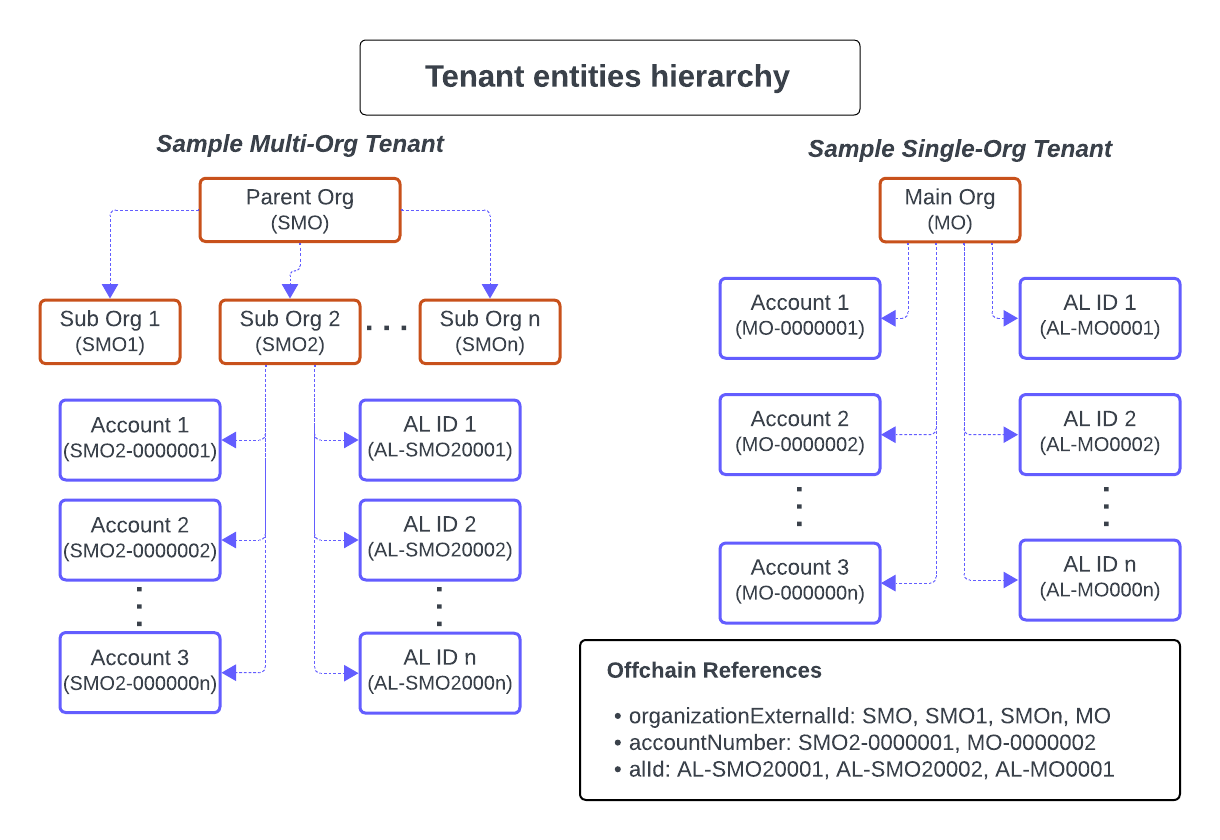
The diagram below expounds how offchain references, used very frequently through most of the API endpoints, fit within a tenant's hierarchy.alIds - map to financial instruments
organizationExternalIds & accountNumbers - map to the rest of blockchain entities (with Wallets being frequently mapped to accountNumbers)
Creation of offchain references#
1.
organizationExternalId(s) are 3-4 character codes assigned at the time a tenant signs-up to use Vulcan Forge
a. can be created by Alphledger staff and assigned to the tenant
b. generated automatically if not supplied at account/blockchain entity creation
c. a separate set of API endpoints for setting up of Offchain Entities.
Modified at 2026-03-08 15:37:31